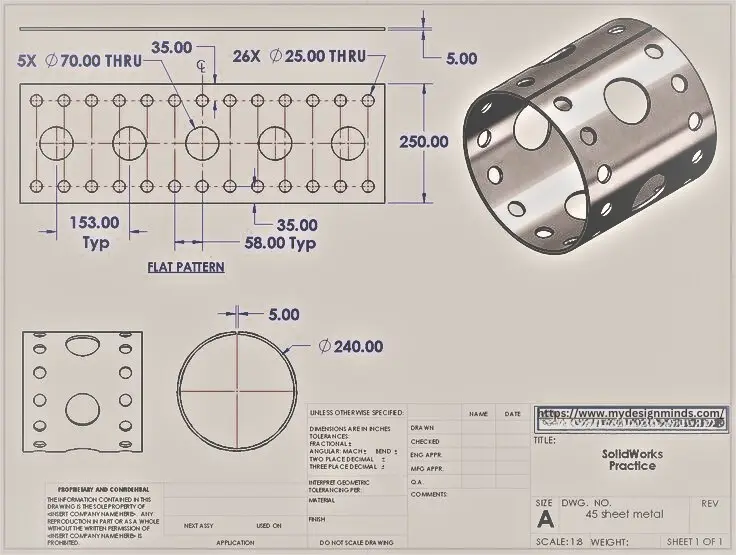
Creating a product that works in a CAD model is only the beginning. A successful product must also be practical to manufacture, assemble, inspect, test, and maintain. Production-Ready Mechanical Design brings these requirements together to transform an engineering concept into a product that can move confidently toward manufacturing.
Whether you are developing industrial equipment, machinery, consumer products, enclosures, components, or specialized assemblies, a structured design process can reduce manufacturing problems, control costs, and improve product reliability.
What Is a Production-Ready Mechanical Design?
A production-ready mechanical design is an engineering design that has been developed with real manufacturing and assembly requirements in mind.
It includes appropriate dimensions, tolerances, materials, manufacturing methods, component interfaces, fastening systems, and technical documentation. The objective is to create a design that is not only functional but also realistic to produce consistently.
A concept may demonstrate how a product should work, while a production-ready design explains how that product can actually be manufactured.
1. Define Product Requirements First
The design process should begin with clear product requirements. Identify the product’s purpose, operating environment, expected loads, dimensions, performance requirements, target cost, production quantity, and expected service life.
Understanding these requirements early helps designers make better decisions about materials, components, mechanisms, manufacturing processes, and overall product architecture.
Clear requirements also provide measurable criteria for later testing and validation.
2. Develop the Product Concept
Once requirements are established, designers can develop and evaluate different concepts. Several approaches may be considered before selecting a suitable solution.
During concept development, consider functionality, component availability, manufacturing complexity, assembly sequence, maintenance, safety, and scalability.
A practical concept should solve the intended problem without introducing unnecessary complexity.
3. Build Accurate CAD Models
3D CAD modeling converts the selected concept into a detailed digital representation. Individual components and complete assemblies can be developed and evaluated before physical manufacturing begins.
CAD allows designers to examine clearances, interfaces, mounting points, moving components, fasteners, and potential interference.
Accurate CAD data is also useful for generating engineering drawings, prototypes, manufacturing information, and assembly documentation.
4. Select Materials Based on Application
Material selection affects strength, weight, durability, corrosion resistance, thermal behavior, appearance, and manufacturing cost.
Designers should consider the actual operating conditions rather than selecting materials solely on price or appearance.
Metals such as aluminium and steel may be appropriate for structural applications, while engineering plastics may be suitable for lightweight housings, covers, and specialized components.
Material availability and compatibility with the selected manufacturing process should also be considered.
5. Apply Design for Manufacturing Principles
One of the most important steps is ensuring that the design can be manufactured efficiently.
Mechanical design for manufacturing considers production methods, tooling requirements, tolerances, material behavior, machine capabilities, and production volumes.
Depending on the product, manufacturing may involve CNC machining, sheet-metal fabrication, injection molding, die casting, aluminium extrusion, welding, or additive manufacturing.
The design should use realistic features and avoid unnecessary complexity wherever possible.
6. Establish Practical Tolerances
Not every dimension needs extremely tight tolerances. Excessively tight tolerances can increase machining time, inspection requirements, tooling costs, and overall production expenses.
A manufacturable mechanical design uses tolerances according to the actual functional requirements of each component.
Critical interfaces may require tighter control, while non-critical dimensions can often use more practical tolerances.
This approach can help balance product performance with manufacturing efficiency.
7. Design for Assembly and Maintenance
A product should be easy to assemble correctly and practical to service after installation.
Consider fastener accessibility, component orientation, assembly sequence, cable routing, replaceable parts, inspection access, and maintenance requirements.
Reducing unnecessary components and simplifying assembly can improve production consistency and reduce assembly time.
8. Prototype and Test the Design
Even a carefully developed CAD model should be validated through physical testing where appropriate.
Prototypes can reveal issues involving fit, movement, ergonomics, strength, heat, vibration, assembly, and usability.
Depending on the product, prototypes may be created using 3D printing, CNC machining, sheet metal, or other manufacturing techniques.
Testing provides valuable information for refining the design before larger-scale production.
9. Complete Engineering Documentation
A production-ready product requires more than a 3D model. Appropriate documentation may include:
- Detailed manufacturing drawings
- Dimensions and tolerances
- Material specifications
- Bill of Materials
- Assembly drawings
- Surface-finish requirements
- Hardware specifications
- Manufacturing notes
- Inspection requirements
Clear documentation reduces ambiguity between designers, manufacturers, suppliers, and assembly teams.
10. Conduct a Final Design Review
Before releasing the product for manufacturing, conduct a structured review of the complete design.
Check component fit, material selection, tolerances, manufacturability, assembly, serviceability, safety considerations, and documentation.
A final review can identify problems before they reach the production floor.
This is an essential part of Production-Ready Mechanical Design because changes made during CAD development are generally easier and less expensive than changes made after tooling or mass production has started.
Why Production Readiness Matters
A good design should balance performance, quality, manufacturability, cost, and reliability. Focusing only on appearance or functionality can create challenges during production.
Mechanical design for manufacturing helps connect engineering decisions with real production requirements, while a manufacturable mechanical design considers how each component will actually be produced.
For businesses developing new products, this approach can reduce unnecessary redesigns, improve communication with manufacturers, and create a smoother transition from prototype to production.
From Concept to Manufacturing With My Design Minds
My Design Minds supports businesses with mechanical CAD, product design, prototyping, and manufacturing-focused engineering solutions. The team can help develop product concepts into detailed CAD models while considering functionality, materials, assembly, manufacturability, and production requirements.
For startups and established businesses, the goal is to create practical engineering designs that can progress from concept to prototype and ultimately toward manufacturing.
A structured production-ready product development process can help identify design challenges earlier and establish a clearer path toward production.
Whether you are developing a machine component, industrial product, enclosure, mechanical assembly, or custom product, My Design Minds can support the design journey with engineering-focused solutions.
Conclusion
Creating a production-ready mechanical design requires more than accurate CAD modeling. It involves understanding product requirements, selecting suitable materials, applying manufacturing principles, establishing practical tolerances, designing for assembly, validating prototypes, and preparing clear engineering documentation.
By considering manufacturing from the beginning, businesses can create products that are easier to produce, assemble, inspect, maintain, and scale. A well-planned design process ultimately creates a stronger connection between the original idea and the finished manufactured product.