Introduction
Modern product development depends on accurate digital information. A 3D CAD model can communicate the shape, dimensions, and assembly of a product, but manufacturers also need detailed technical documentation to produce components correctly. The transition from a 3D model to a manufacturing-ready drawing is therefore an important part of the engineering workflow.
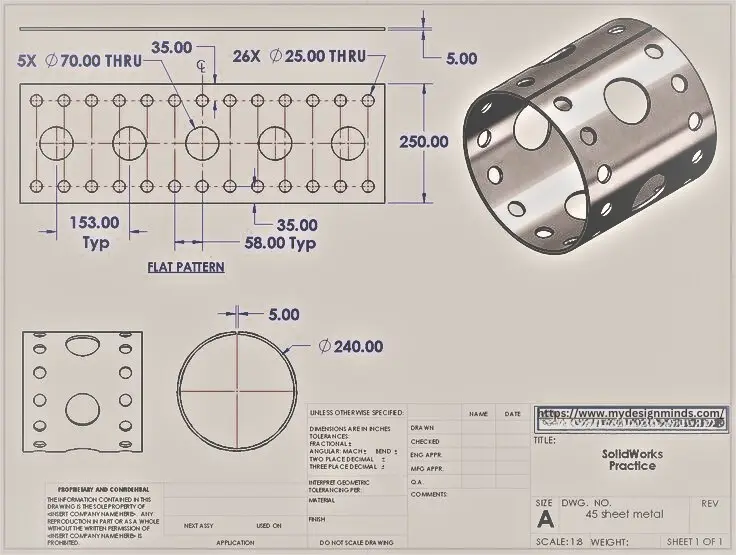
Production Drawing Services help convert digital product models into detailed technical drawings that communicate dimensions, tolerances, materials, finishes, and manufacturing requirements. For companies in Delhi NCR, an organised CAD workflow can improve communication between designers, engineers, suppliers, and manufacturers while reducing avoidable production errors.
1. Creating the Initial 3D CAD Model
The workflow begins with a three-dimensional digital model. Designers develop individual components and assemblies based on product requirements, sketches, measurements, reference data, or existing physical parts.
The model establishes the basic geometry and provides a visual representation of the proposed product. Engineers can review component relationships, clearances, mounting features, and overall dimensions before documentation is prepared.
2. Reviewing Design Requirements
Before creating drawings, the digital model should be checked against the product requirements. Engineers review dimensions, functional features, material specifications, assembly relationships, and manufacturing considerations.
This stage is important because errors in the model can be transferred into downstream documentation. Reviewing the design early provides an opportunity to correct geometry and confirm that the model reflects the intended product.
3. Developing Detailed Components
Complex products often contain multiple parts that require individual documentation. Each component is reviewed and prepared according to its manufacturing requirements.
3D CAD Modeling allows teams to examine component geometry in detail and identify features that need special attention. Holes, threads, slots, curved surfaces, mating features, and critical dimensions can be evaluated before the drawing stage.
4. Converting the Model Into Technical Views
Once the model is approved, engineers create drawing views that communicate the component clearly. These can include front, top, side, sectional, detail, and isometric views.
The objective is to provide enough information for a manufacturer or fabricator to understand the component without relying on assumptions. Appropriate views should clearly communicate complex features and relationships.
5. Adding Dimensions and Tolerances
Dimensions are a critical part of manufacturing documentation. Engineers identify the measurements required to produce and inspect the component.
Tolerances are added where necessary to define acceptable dimensional variation. Not every feature needs the same tolerance, so requirements should be based on function, assembly, and manufacturing capability.
6. Adding Materials and Manufacturing Specifications
A production drawing may include material grades, surface finishes, heat-treatment requirements, coatings, welding information, or other manufacturing notes.
Engineering Drawing Services can help organise this information into a consistent drawing format. Clear specifications reduce uncertainty and provide manufacturers with the technical information needed to plan production.
7. Creating Assembly Drawings
Individual component drawings are not always sufficient for complex products. Assembly drawings show how parts fit together and can identify component positions, fasteners, quantities, and relationships.
Assembly documentation can help manufacturing and assembly teams understand the sequence and arrangement of components. It can also support inspection, maintenance, and future modifications.
8. Applying Drawing Standards
Consistency is essential when technical drawings are shared among multiple teams. Drawing standards help establish consistent practices for line types, symbols, dimensions, notes, title blocks, revisions, and other technical information.
For businesses working with suppliers in Delhi NCR or across different regions, standardised documentation can make technical communication easier and reduce interpretation problems.
9. Checking the Drawing Against the 3D Model
A final comparison between the drawing and the 3D model is an important quality step. Engineers check whether dimensions, features, views, notes, and specifications correctly represent the approved model.
Manufacturing Drawings should not contain information that conflicts with the digital model. A structured review can identify missing dimensions, incorrect views, inconsistent notes, or revision errors before the files are released.
10. Revision and Document Control
Product designs can change during development. When modifications occur, drawings need to be updated and clearly identified with revision information.
Proper document control ensures that manufacturers receive the latest approved information. It also creates a record of design changes, which can be useful for future product development, quality reviews, and maintenance.
11. Preparing Files for Manufacturing
After technical checks are completed, the final drawing package can be prepared for manufacturing. Depending on the project, this may include 2D drawings, 3D CAD files, assembly drawings, bills of materials, and supporting technical documentation.
Production Drawing Services provide the link between digital product development and physical manufacturing. Accurate documentation helps suppliers understand what needs to be produced and how critical requirements should be interpreted.
Why the CAD Workflow Matters in Delhi NCR
Delhi NCR has a diverse ecosystem of manufacturers, engineering companies, startups, suppliers, and product development businesses. Many projects involve collaboration between different organisations, making clear digital documentation particularly important.
A structured CAD workflow helps businesses move information from concept to manufacturing in a controlled way. It can reduce communication gaps, support faster design changes, and provide manufacturers with consistent technical references.
Conclusion
The journey from a 3D model to a production drawing is more than simply converting a file into 2D views. It involves design review, component development, dimensioning, tolerancing, material specifications, assembly documentation, quality checks, and revision control.
By using Production Drawing Services as part of a structured CAD workflow, businesses can improve technical communication and prepare more reliable documentation for manufacturing. Combined with 3D CAD Modeling and Engineering Drawing Services, the workflow creates a clear connection between product design and production.
My Design Minds
My Design Minds provides CAD design, product engineering, prototyping, and manufacturing support for businesses across Delhi NCR and beyond. Our Production Drawing Services convert 3D models into detailed, manufacturing-ready technical documentation. We create clear component and assembly drawings with dimensions, tolerances, materials, notes, and revision information to support manufacturing communication. Our team also supports CAD modelling, product development, engineering documentation, and manufacturing preparation for startups, SMEs, and businesses. From concept development to production-ready documentation, My Design Minds focuses on accuracy, clarity, and practical engineering requirements, helping clients reduce communication gaps, minimise rework, and move efficiently from digital concepts toward manufacturing.