
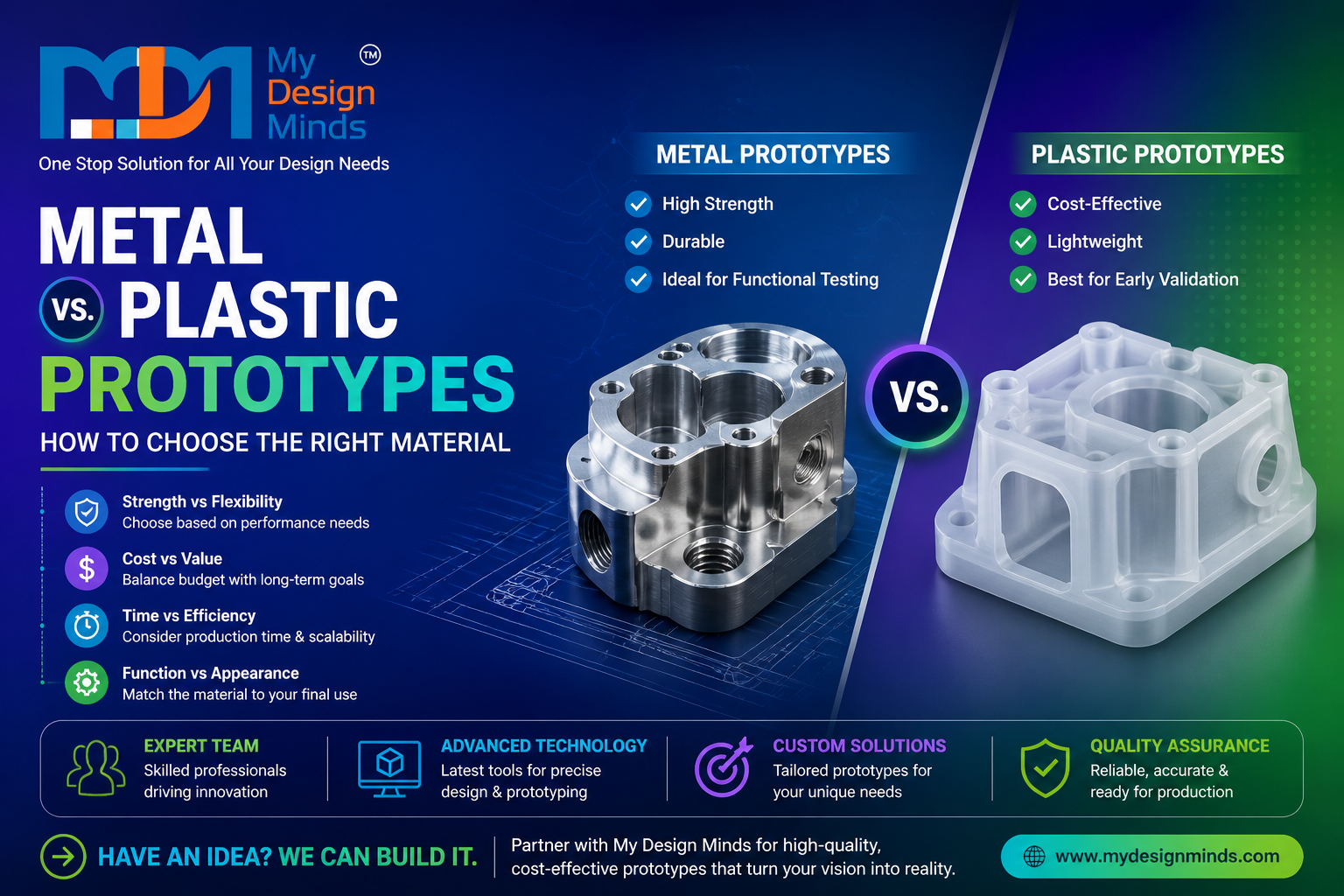
Choosing the right material is a critical step in product development. The debate around metal vs plastic prototypes often depends on factors such as cost, durability, functionality, and application. Selecting the appropriate material can significantly impact the success of your prototype and the final product.
Prototyping allows businesses to test ideas, evaluate performance, and refine designs before mass production. However, the choice between metal and plastic is not always straightforward. Each material offers unique advantages and limitations, making it essential to understand their differences.
Understanding Prototype Materials
Prototypes are early models used to test product concepts. They help identify design flaws, improve functionality, and ensure the product meets user expectations. Material selection plays a vital role in determining how accurately a prototype represents the final product.
When comparing prototype material selection, businesses must consider mechanical properties, production methods, and intended use. The right material ensures that testing results are reliable and meaningful.
Advantages of Metal Prototypes
Metal prototypes are known for their strength and durability. They are ideal for products that require high structural integrity or will be exposed to extreme conditions.
Key benefits include:
- High strength and resistance to wear
- Excellent heat tolerance
- Suitable for functional testing
- Long-lasting performance
Metal is often preferred in industries such as automotive, aerospace, and heavy machinery. It allows engineers to test real-world conditions effectively. However, metal prototypes can be expensive and time-consuming to produce compared to plastic alternatives.
Advantages of Plastic Prototypes
Plastic prototypes are widely used due to their affordability and flexibility. They are especially useful during the early stages of product development.
Key benefits include:
- Lower production cost
- Faster manufacturing process
- Lightweight and versatile
- Ideal for visual and design testing
With advancements in technology, plastic prototypes can now achieve high levels of precision and detail. Many businesses rely on plastic vs metal prototyping to balance cost and performance during development.
Key Factors to Consider When Choosing Material
Selecting the right material depends on several important factors:
1. Purpose of the Prototype
If the prototype is for visual representation, plastic may be sufficient. For functional testing, metal is often the better choice.
2. Budget Constraints
Plastic is generally more cost-effective, making it suitable for startups and early-stage development.
3. Production Timeline
Plastic prototypes can be produced quickly, while metal may require more time and resources.
4. Durability Requirements
For products exposed to stress, heat, or pressure, metal provides better performance.
5. Manufacturing Process
Different materials require different production methods. Understanding these processes helps in making the right decision for rapid prototyping materials.
Metal vs Plastic Prototypes

Both materials serve different purposes, and the choice depends on your project requirements.
| Factor | Metal Prototypes | Plastic Prototypes |
|---|---|---|
| Cost | Higher | Lower |
| Durability | Very High | Moderate |
| Weight | Heavy | Lightweight |
| Production Speed | Slower | Faster |
| Flexibility | Limited | High |
This comparison highlights that there is no one-size-fits-all solution. The right choice depends on your product goals and testing requirements.
When to Use Metal Prototypes
Metal prototypes are ideal when:
- You need to test mechanical strength
- The product will face extreme conditions
- High precision and durability are required
They are commonly used in engineering applications where performance is critical.
When to Use Plastic Prototypes
Plastic prototypes are suitable when:
- You are in the early design phase
- Cost and speed are priorities
- Visual appearance and form are important
They are widely used for consumer products and initial concept validation.
Making the Right Decision
Choosing between metal and plastic prototypes requires a balanced approach. Businesses must evaluate their goals, budget, and timeline before making a decision.
Combining both materials can also be an effective strategy. For example, plastic can be used for initial testing, followed by metal prototypes for final validation. This approach ensures cost efficiency while maintaining product quality.
How My Design Minds Helps You Choose the Right Material
At My Design Minds, we understand that selecting the right material is crucial for successful product development. Our team provides expert guidance in metal vs plastic prototypes to help you make informed decisions based on your specific requirements.
We offer end-to-end prototyping solutions, including material selection, CAD design, and manufacturing support. By analyzing your product’s functionality, budget, and timeline, we recommend the most suitable approach for your project.
With advanced tools and industry expertise, My Design Minds ensures that your prototypes are accurate, cost-effective, and ready for production. Whether you need rapid prototyping or high-performance models, we deliver solutions that align with your business goals and help you bring your ideas to life.
