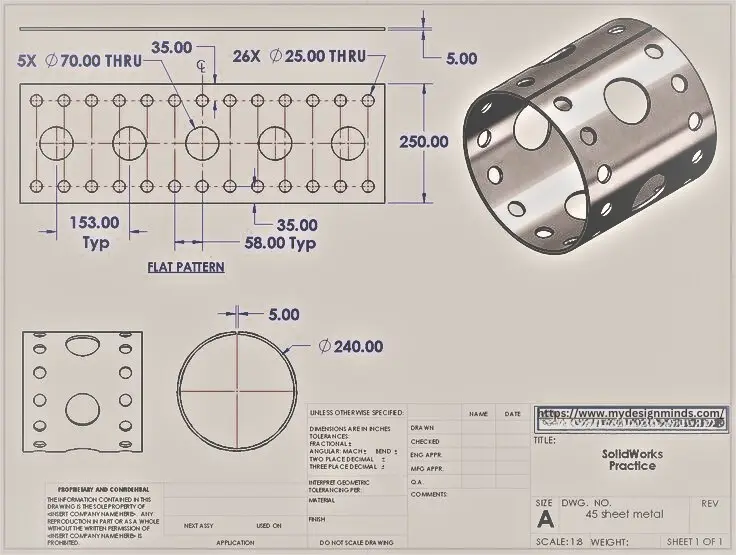
Mechanical enclosure design protect the components inside industrial products while supporting safety, durability, thermal performance, usability, and manufacturing efficiency. A well-designed enclosure does more than cover electronics or mechanical assemblies. It must accommodate internal components, withstand operating conditions, provide service access, and integrate smoothly with the complete product.
Mechanical Enclosure Design begins with understanding how the enclosure will be used and what it needs to protect. Component layout, environmental exposure, mounting requirements, heat generation, material selection, production volume, and maintenance requirements should be considered before detailed CAD development begins.
1. Start With Product Requirements
The first step is to define the enclosure’s purpose. Identify the components requiring protection, available installation space, operating temperature, expected mechanical loads, ingress requirements, access points, and safety considerations.
Create a clear list of functional and physical requirements before developing the enclosure. This helps prevent late-stage modifications and supports better decisions about dimensions, materials, fasteners, seals, and manufacturing processes.
2. Plan the Internal Component Layout
A good enclosure starts from the inside. Arrange PCBs, motors, sensors, wiring, connectors, batteries, fans, and other components according to their functional relationships.
Leave sufficient clearance around components for assembly, heat dissipation, cable routing, and maintenance. Parts that require regular servicing should be accessible without unnecessary disassembly.
During industrial enclosure design, designers should also determine how internal components will be secured. Mounting bosses, brackets, rails, standoffs, threaded inserts, and other features can be integrated into the enclosure based on the assembly strategy.
3. Select the Right Material
Material selection affects strength, weight, durability, thermal behavior, corrosion resistance, appearance, and production cost.
Common materials include aluminium, steel, stainless steel, ABS, polycarbonate, and other engineering plastics. Aluminium can be suitable where low weight and heat dissipation are important, while engineering plastics can provide design flexibility and electrical insulation.
The material should be selected according to the actual operating environment rather than appearance or cost alone. Material availability and compatibility with the selected manufacturing process should also be considered.
4. Consider Thermal Management
Industrial products may generate heat through motors, processors, power electronics, batteries, or other components. If heat cannot escape efficiently, component performance and service life may be affected.
Thermal management can involve ventilation openings, heat sinks, cooling fans, conductive materials, thermal interfaces, or enclosure features that improve airflow.
For sealed products, thermal analysis becomes particularly important because conventional ventilation may not be practical. Custom mechanical enclosures should therefore account for heat generation and dissipation during the early design stage.
5. Design for Environmental Protection
Industrial products may encounter dust, moisture, chemicals, vibration, impact, or extreme temperatures. The required protection level should be established before finalizing the enclosure architecture.
Seals, gaskets, controlled joints, protective coatings, and suitable fastening methods can help provide environmental protection. Cable and connector entry points should receive particular attention because poorly designed openings can compromise the enclosure.
Custom mechanical enclosures should be developed around the actual operating conditions rather than generic assumptions about protection.
6. Design for Manufacturing and Assembly
A strong enclosure concept can become expensive if it is difficult to manufacture or assemble. The production method should be selected according to volume, geometry, tolerance, material, and budget.
Sheet-metal fabrication, CNC machining, injection molding, die casting, 3D printing, and aluminium extrusion can all be appropriate depending on the product.
During industrial enclosure design, unnecessary features should be minimized and practical wall thicknesses, standard fasteners, accessible joints, and manufacturable geometries should be considered. Designing for efficient assembly can reduce labor time and improve production consistency.
7. Plan Maintenance and Service Access
Industrial equipment often requires inspection, cleaning, troubleshooting, or component replacement. An enclosure should provide logical access to parts that may require service.
Removable panels, access covers, captive fasteners, modular subassemblies, and strategically positioned connectors can make maintenance easier. However, service openings should not unnecessarily compromise structural strength or environmental protection.
8. Validate the Design Before Production
Before releasing an enclosure for production, review the CAD model and, where appropriate, develop a physical prototype.
Check component fit, clearances, assembly sequence, fastener access, cable routing, ergonomics, thermal behavior, and potential interference. Prototypes can reveal issues that may not be obvious during digital review.
Industrial product enclosure design also benefits from tolerance analysis and structured design reviews before tooling or large-scale production begins.
Why Professional Enclosure Design Matters
A carefully developed enclosure can improve product durability, simplify assembly, support maintenance, and create a consistent professional appearance. It can also help identify manufacturing and integration issues before they become expensive production problems.
For companies developing industrial equipment, industrial product enclosure design becomes particularly important when the housing must accommodate complex components, demanding environmental conditions, or strict dimensional requirements.
A structured Mechanical Enclosure Design process connects product requirements with CAD development, material selection, manufacturing, assembly, testing, and long-term serviceability. Considering these factors together can result in a more practical and production-ready product.
Why Choose My Design Minds?
My Design Minds helps businesses turn product concepts into practical engineering solutions through mechanical CAD, product design, prototyping, and manufacturing support. The team supports concept development, 3D modeling, design refinement, and preparation for production.
For enclosure projects, My Design Minds can consider component layout, materials, mounting, manufacturability, thermal requirements, environmental protection, and service access during development. Its engineering-focused approach supports startups, manufacturers, and businesses developing new industrial products.
Whether you need a protective housing, equipment cabinet, machine enclosure, or product-specific casing, My Design Minds can help transform your requirements into a practical, manufacturable design.