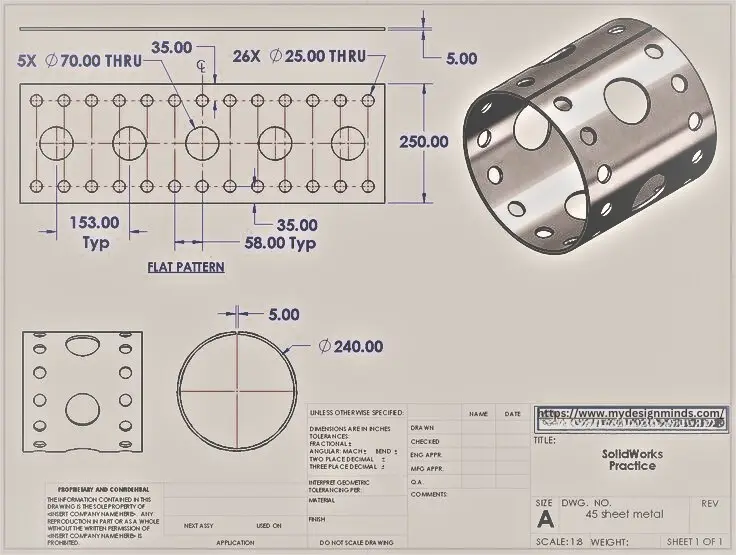
A successful product must do more than look good. It needs to perform consistently, withstand real-world conditions, remain safe during operation, and provide long-term value. This is where mechanical design becomes a critical part of product development. From selecting materials and defining dimensions to analyzing loads and planning manufacturing methods, every design decision can influence product performance and reliability.
For manufacturers and startups, investing in professional Mechanical Design Services can help transform an initial concept into a functional, manufacturable, and dependable product.
What Is Mechanical Design?
Mechanical design is the process of creating and developing mechanical components, assemblies, and products based on functional, performance, safety, and manufacturing requirements. It combines engineering principles, computer-aided design, material knowledge, and manufacturing considerations.
A well-developed design considers how a product will operate throughout its expected lifecycle. Engineers evaluate factors such as forces, movement, temperature, vibration, material strength, tolerances, and environmental conditions before finalizing the design.
This approach helps identify potential problems before physical production begins.
How Mechanical Design Improves Product Performance
Product performance depends heavily on how effectively individual components work together. Poorly designed parts can create excessive friction, unwanted movement, overheating, vibration, or premature failure.
Professional Mechanical Design Services help engineers optimize components for their intended application. Proper geometry can improve movement, reduce unnecessary material usage, and enhance structural strength. Engineers can also evaluate load-bearing areas and modify designs to handle operational stresses more effectively.
For example, a machine component exposed to repeated loads needs to be designed with appropriate dimensions, materials, and safety factors. A carefully engineered design can reduce deformation and improve operational consistency.
The Role of CAD in Mechanical Product Development
Computer-aided design has become an important part of modern product development. 3D CAD models allow engineers to visualize components and assemblies before manufacturing begins.
CAD Design Services can support accurate modeling, assembly development, design modifications, and preparation of technical drawings. Engineers can identify interference between components, check dimensions, and make design changes without immediately producing physical prototypes.
Digital models also make collaboration easier between designers, engineers, manufacturers, and other stakeholders. Changes can be documented and communicated more efficiently, helping reduce misunderstandings during development.
Mechanical Design and Product Reliability
Reliability means a product can perform its intended function consistently over its expected operating life. Mechanical design directly influences this capability.
Engineers consider repeated loading, wear, fatigue, impact, vibration, thermal expansion, and environmental exposure when developing components. Material selection is equally important because different applications require different combinations of strength, hardness, corrosion resistance, flexibility, or heat resistance.
Using Product Design Services during the development process can help businesses address these considerations systematically. A reliable design does not simply focus on whether a product works once; it considers how the product will behave after repeated use and under different operating conditions.
Reducing Manufacturing and Development Problems
Design decisions made early can significantly affect manufacturing. A component may function correctly in a digital model but become difficult or expensive to manufacture if tolerances, tooling requirements, material availability, or assembly processes are overlooked.
Design for Manufacturing (DFM) principles help engineers create components that are practical to produce. Features can be simplified where appropriate, unnecessary complexity can be removed, and tolerances can be aligned with realistic manufacturing capabilities.
This approach can reduce rework, production delays, material waste, and unnecessary tooling costs.
The Importance of Engineering Analysis
Engineering analysis provides another layer of confidence before production. Depending on the product, designers may evaluate structural strength, thermal behavior, motion, vibration, or other performance parameters.
Simulation and analysis can reveal areas where a component may experience excessive stress or deformation. Designers can then refine the geometry or material selection before moving to physical prototyping.
This iterative process helps reduce development risks and provides useful technical information for making informed design decisions.
Designing for Safety and Long-Term Use
Safety should be considered throughout mechanical product development. Components that experience significant loads or movement need appropriate safety factors and carefully controlled dimensions.
Reliable mechanical design also considers maintenance and serviceability. Components that require regular replacement should be accessible, while assemblies should be designed to simplify inspection, repair, or adjustment where practical.
A thoughtful design therefore considers the complete product lifecycle rather than focusing only on initial production.
Why Businesses Should Invest in Professional Mechanical Design
Professional engineering support can help businesses manage the technical complexity involved in product development. Experienced designers understand how geometry, materials, manufacturing processes, tolerances, and performance requirements interact.
For startups, professional design support can help turn an idea into a technically practical product. For established manufacturers, it can support product improvements, redesigns, engineering changes, and development of new components.
The right design approach can ultimately contribute to better product quality, reduced development risks, and more predictable manufacturing outcomes.
Conclusion
Mechanical design is one of the foundations of a successful physical product. It influences strength, functionality, manufacturability, safety, reliability, and lifecycle performance. By combining CAD modeling, engineering analysis, material selection, and manufacturing considerations, businesses can develop products that are better prepared for real-world use.
Investing in professional Mechanical Design Services can help organizations move from concept to production with greater technical confidence while reducing avoidable design and manufacturing challenges.
About My Design Minds
My Design Minds provides engineering and product development support for businesses looking to turn concepts into practical, production-ready solutions. Its capabilities include mechanical design, CAD modeling, product development, engineering analysis, prototyping, manufacturability assessment, and manufacturing support. With a focus on functional design and engineering accuracy, My Design Minds helps businesses develop products with performance, reliability, and production requirements in mind. From early-stage concepts to design refinement and production preparation, the team supports a structured development process. Businesses can work with My Design Minds for engineering solutions tailored to their product requirements, industry applications, and manufacturing objectives.