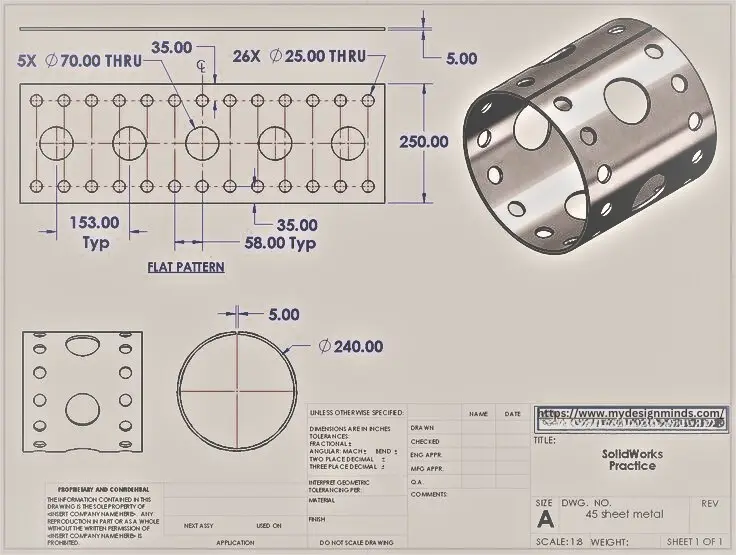
A product may look perfect in a CAD model, but that does not always mean it will be easy, practical, or cost-effective to manufacture. Manufacturability Analysis during the design stage helps businesses identify potential production challenges before they become expensive problems. For startups, SMEs, and established manufacturers in Delhi NCR, evaluating manufacturability early can support better design decisions and smoother production planning.
Why Manufacturability Should Begin Early
Many manufacturing problems originate during product design. Complex geometries, unnecessary features, difficult tolerances, unsuitable materials, or inaccessible areas can increase production time and cost. If these issues are discovered only after tooling or prototyping, making changes can require additional engineering work and investment.
Early Design for Manufacturing considerations allow designers and engineers to review whether a proposed product can be manufactured using the intended processes. This approach connects product development with real-world manufacturing requirements instead of treating design and production as completely separate stages.
Identifying Production Challenges Before Prototyping
One of the major benefits of Manufacturability Analysis is the ability to identify potential production issues before physical prototypes are developed. Engineers can review the CAD model, individual components, assemblies, materials, dimensions, tolerances, and manufacturing methods.
For example, a component may require a geometry that is difficult to machine, an injection-moulded part may have an unsuitable wall thickness, or a sheet-metal design may contain bends that are difficult to produce. Detecting these concerns digitally can allow the design team to make adjustments before manufacturing begins.
This early review can also support Manufacturing Feasibility Analysis by examining whether the selected production process, equipment, materials, and tolerances are appropriate for the intended product.
Reducing Product Development Costs
Late-stage design changes can become expensive. A change made after tooling, mould development, or production setup may affect multiple components and processes. In contrast, modifying a digital design is generally easier before physical manufacturing activities begin.
Early manufacturability reviews can help companies reduce unnecessary iterations, material waste, tooling modifications, and production delays. This is particularly useful for startups and SMEs working with limited development budgets.
The goal is not simply to make a product cheaper. It is to find practical ways to balance design requirements, performance, quality, manufacturing capability, and overall production cost.
Improving Product Quality and Reliability
Manufacturing-friendly designs can also contribute to consistent product quality. When dimensions, tolerances, materials, assembly methods, and production processes are considered together, potential sources of variation can be identified earlier.
A well-reviewed design can make it easier for manufacturers to maintain required dimensions and repeat production accurately. It can also reduce problems related to assembly, component fit, tooling access, and inspection.
Product Design Optimization plays an important role in this process. Instead of changing a design only after a manufacturing problem occurs, engineers can evaluate the product proactively and identify opportunities to improve functionality and production efficiency.
Supporting Better Material and Process Selection
Material selection directly affects manufacturing. A material may provide the required strength or appearance but may be difficult to machine, mould, form, or finish using the selected production process.
During an early review, engineers can compare material characteristics with manufacturing requirements. They can also consider production volume, tooling requirements, surface finish, component complexity, and expected operating conditions.
This approach supports Design for Manufacturing by ensuring that design decisions are considered alongside practical production capabilities.
Making Designs Ready for Different Manufacturing Methods
Different products require different manufacturing approaches. CNC machining, injection moulding, sheet-metal fabrication, casting, 3D printing, extrusion, and other processes each have their own design considerations.
A component designed for 3D printing may require changes before being produced through injection moulding. Similarly, a machined component may be redesigned for casting when production volume increases.
A structured Manufacturability Analysis helps identify these process-specific requirements and enables engineers to adapt the design according to the intended manufacturing method.
Enabling Faster Prototyping and Production
When potential manufacturing issues are addressed before prototyping, the transition from CAD model to physical prototype can become more efficient. Fewer unexpected problems may mean fewer redesign cycles and better coordination between designers, engineers, prototype manufacturers, and production teams.
For businesses operating in competitive markets, this can help shorten development timelines while maintaining appropriate quality standards.
Supporting Product Design Optimization
Product Design Optimization is most effective when manufacturing requirements are considered alongside performance and functionality. Engineers can review component geometry, assembly requirements, tolerances, materials, and production methods to identify practical improvements.
This approach can help create designs that are not only technically functional but also easier to manufacture, assemble, inspect, and scale.
Conclusion
Starting manufacturability evaluation during the design stage gives businesses an opportunity to identify production challenges before they become costly problems. From material and process selection to tolerances, tooling, assembly, and production costs, early review can influence many aspects of product development.
For startups, SMEs, and manufacturers in Delhi NCR, integrating manufacturing considerations into product engineering can create a more coordinated path from concept and CAD development to prototyping and production.
About My Design Minds
My Design Minds provides integrated design and engineering support for businesses developing new or improved products. Our team supports CAD design, 3D visualization, product engineering, reverse engineering, prototyping, engineering documentation, mould development, and manufacturing support. We work with startups, SMEs, and industries that need practical solutions from concept development through production readiness. Our services help businesses connect product design with prototyping and manufacturing requirements. Based in India, My Design Minds supports clients across different industries and locations with flexible design and engineering solutions tailored to project requirements, helping transform product concepts into practical, development-ready designs.