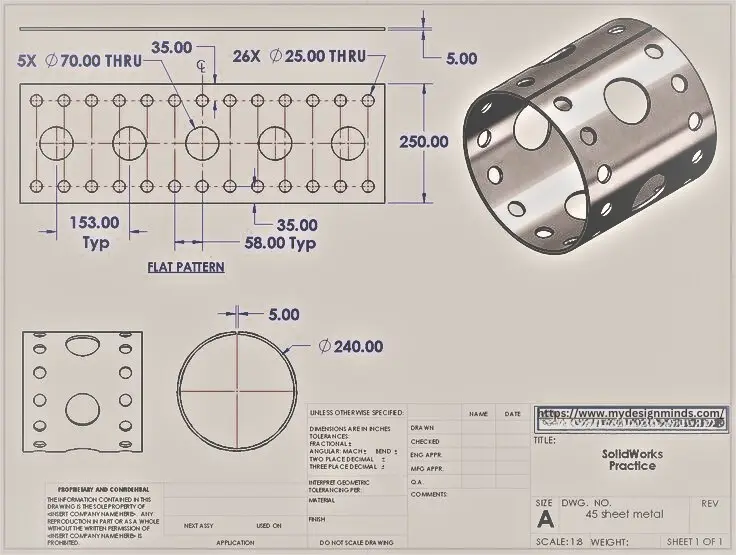

Manufacturing efficiency often hinges on decisions made long before a product hits the assembly line. By integrating thoughtful Product Assembly Design early in the development cycle, engineering teams can dramatically accelerate production timelines, improve product quality, and minimize overall costs. Applying smart design principles turns complex manufacturing challenges into seamless, scalable operational workflows.
Understanding the Fundamentals of Assembly Design
Designing a product is not just about aesthetics or functional performance; it is also about how efficiently the components fit together. When engineering teams implement proven design for assembly strategies, they focus on eliminating unnecessary steps and reducing manual effort during final manufacturing.
Minimizing Part Counts and Fasteners
One of the quickest ways to optimize production is to simplify the overall bill of materials (BOM).
- Consolidate functions: Look for opportunities to combine multiple components into a single molded or machined part.
- Reduce threaded fasteners: Standard screws and bolts require tools and time. Utilizing snap-fits, press-fits, or tab-and-slot mechanisms helps speed up assembly.
- Standardize hardware: When fasteners are necessary, use uniform sizes across the entire assembly to avoid frequent tool changes.
When engineers work to optimize product design, they directly decrease the risk of component misalignment, reduce stock-keeping units (SKUs), and lower inventory management overhead.
Core Strategies for a Streamlined Manufacturing Process
Creating a high-throughput production workflow requires designing parts that inherently prevent assembly errors and facilitate manual or automated handling.
       +-------------------------------------------------------+
       |           CORE ASSEMBLY DESIGN STRATEGIES             |
       +-------------------------------------------------------+
                                   |
         +-------------------------+-------------------------+
         |                                                   |
         v                                                   v
+------------------+                               +------------------+
| Top-Down Assembly |                               | Poka-Yoke Design |
+------------------+                               +------------------+
| Build along z-axis|                               | Asymmetric shapes|
| Avoid flips/rotations                             | One-way alignment|
+------------------+                               +------------------+
Designing for Top-Down Assembly
A simple yet highly effective approach involves stacking components from a single direction, typically along the vertical axis (top-down).
- Base Component Placement: Start with a sturdy base part that acts as a fixture for subsequent components.
- Unidirectional Stacking: Drop components straight down onto the base without requiring the worker or robot to flip or rotate the assembly.
- Gravity Assistance: Let gravity hold parts in place temporarily before secondary securing steps occur.
This approach establishes a streamlined manufacturing process, reducing operator fatigue and cutting down handling time significantly.
Implementing Mistake-Proofing
Human error is a leading cause of assembly delays and product rejections. Incorporating mistake-proofing directly into physical component design ensures parts can only be joined in the correct orientation.
- Asymmetric Features: Add unique keys, tabs, or offset pin patterns so parts cannot be installed backward.
- Clear Visual Cues: Use distinct shapes or color coding to guide operators during installation.
- Self-Aligning Parts: Chamfer edges and lead-in radii to guide components smoothly into place without jamming.
By adopting proactive design for assembly strategies, manufacturers minimize rework and maintain consistent output quality.
Aligning Engineering Decisions with Business Outcomes
Implementing strategic Product Assembly Design delivers measurable benefits across the entire supply chain. When product architecture aligns with practical manufacturing constraints, companies experience shorter time-to-market and higher operating margins.
Lowering Tooling and Labor Costs
Fewer overall parts translate directly into fewer molds, dies, and fixtures. Moreover, simplified manual steps lower labor costs per unit and make training new assembly line personnel much faster and less prone to errors.
Scaling Production Efficiently
Whether producing hundreds of units or scaling into automated mass production, clean assembly architecture makes transitions smoother. A well-engineered product accommodates robotics, automated pick-and-place machinery, and conveyer systems without requiring complete redesigns later.
Every proactive step taken to optimize product design early on builds flexibility into your long-term manufacturing operations, paving the way for a truly streamlined manufacturing process.
About My Design Minds
At My Design Minds, we turn bold concepts into market-ready realities. As a premier product design and engineering firm, our expert team specializes in end-to-end design for manufacturing (DFM), mechanical engineering, and rapid prototyping. We bridge the gap between creative design vision and cost-effective production, ensuring your products are optimized for fast assembly and maximum quality. Whether you are launching a brand-new innovation or refining an existing line, My Design Minds delivers tailor-made solutions that accelerate time-to-market and drive business growth. Partner with us today to transform your manufacturing process and elevate your product design.