Product development requires accuracy, flexibility, and the ability to respond quickly to changing requirements. Designers and engineers often need to modify dimensions, materials, features, or components several times before a product is ready for manufacturing. Parametric CAD Modeling provides a structured approach that makes these changes faster, more accurate, and easier to manage. By connecting design dimensions and features through defined relationships, engineers can develop products that remain consistent even when modifications are made.
What Is Parametric CAD Modeling?
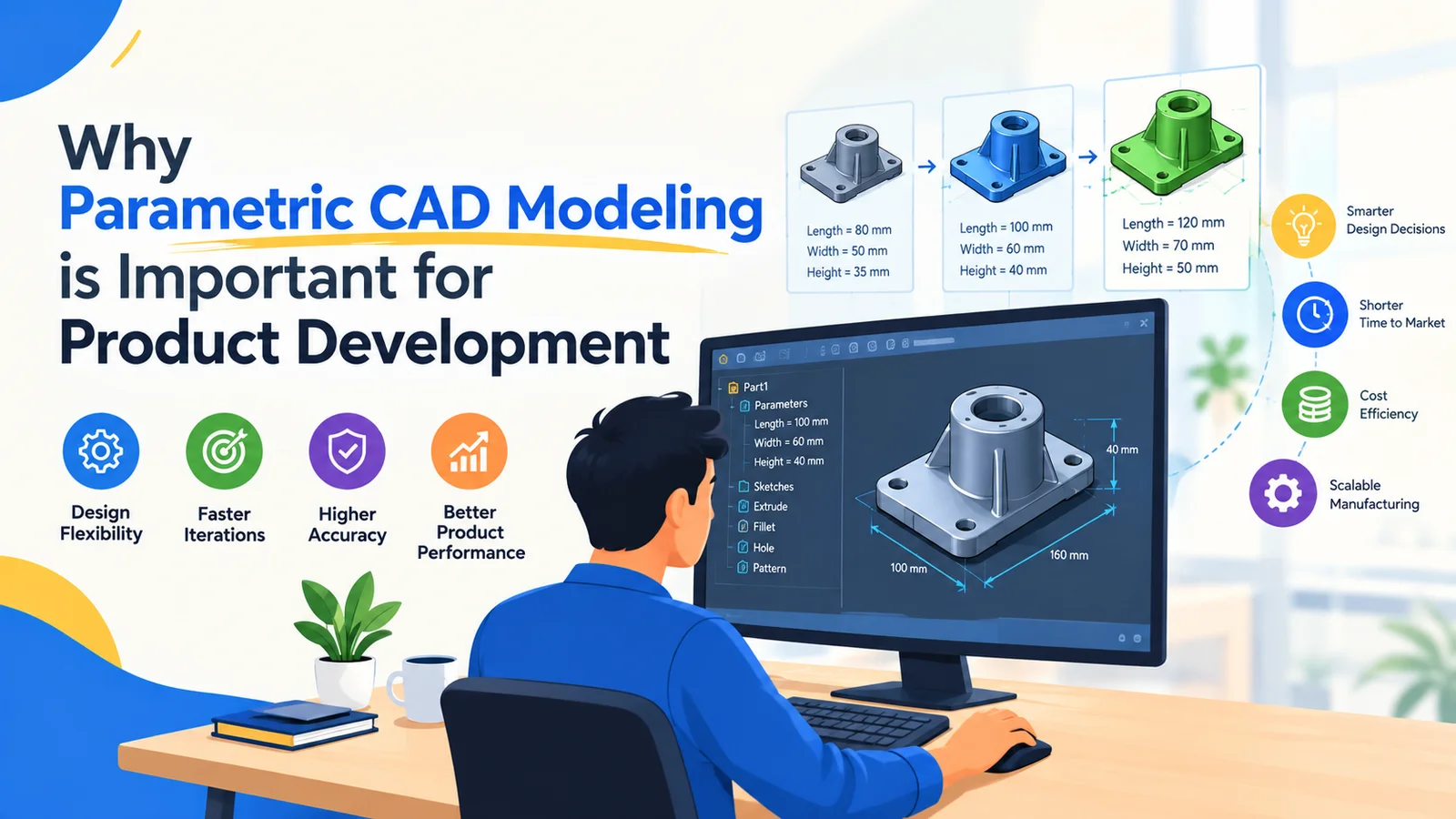
Parametric CAD Modeling is a computer-aided design method where dimensions, geometric relationships, and design features are controlled by parameters. Instead of creating every element independently, designers establish relationships between different parts of a model. When one parameter changes, related features can automatically adjust according to the predefined design logic.
For example, changing the diameter of a hole can automatically update its position, surrounding geometry, or related components. This capability makes parametric modeling particularly valuable for products that require frequent revisions or multiple design variations.
Faster Design Modifications
One of the biggest advantages of parametric CAD modeling is the ability to make design changes efficiently. Traditional modeling approaches may require engineers to manually adjust several connected elements whenever a dimension changes. Parametric systems maintain relationships between features, reducing repetitive work.
This becomes especially useful during product development, when customer feedback, engineering requirements, or manufacturing constraints can lead to multiple revisions. Designers can modify important parameters and quickly generate an updated model without rebuilding the entire design.
Improved Design Accuracy
Accuracy is essential when developing components that must fit together precisely. Parametric CAD Modeling helps maintain consistency by controlling dimensions and relationships throughout the design.
When a key measurement changes, dependent features can update automatically. This reduces the risk of manually entering incorrect dimensions or overlooking related changes. As a result, engineering teams can create more reliable digital models before physical production begins.
Supporting Product Variations
Many businesses develop products in different sizes, configurations, or specifications. Creating every variation from scratch can consume considerable time and resources.
Parametric modeling allows designers to establish a flexible base model that can be adjusted using different parameters. For example, a manufacturer producing several sizes of a mechanical enclosure can modify height, width, thickness, and mounting locations while retaining the fundamental design structure.
This approach makes 3D parametric design particularly useful for product families and customizable products. Engineers can produce variations more efficiently while maintaining consistency across the product range.
Better Collaboration Between Teams
Product development typically involves designers, engineers, manufacturers, quality teams, and other stakeholders. A structured CAD model provides a common digital reference for these teams.
Because dimensions and relationships are clearly defined, engineers can understand how a particular change affects the overall product. Manufacturing teams can also review updated geometry and identify potential production concerns earlier in the development cycle.
Using parametric design solutions can therefore improve communication and reduce misunderstandings between departments.
Reducing Product Development Costs
Design errors discovered after manufacturing begins can result in expensive tooling changes, material waste, production delays, and redesign work. Parametric modeling helps organizations identify and resolve many issues during the digital design stage.
Engineers can test different dimensions and configurations before committing to prototypes or production. This supports a more efficient development process and helps reduce unnecessary iterations.
For startups and established manufacturers alike, reducing repetitive design work and preventing avoidable errors can contribute significantly to overall project efficiency.
Improving Design Intent
Another important benefit is the ability to preserve design intent. Engineers can define how different features should interact rather than simply creating fixed geometry.
Suppose a product requires a mounting hole to remain centered even when the overall width changes. A parametric relationship can preserve that requirement automatically. This means the model reflects the engineering logic behind the product, not just its current shape.
Such flexibility becomes increasingly valuable when products undergo revisions throughout their lifecycle.
Supporting Manufacturing and Prototyping
A well-structured CAD model can support several stages of product development, including prototyping, engineering validation, documentation, and manufacturing preparation. Designers can make adjustments based on prototype testing and quickly update the digital model.
Parametric models can also help engineers explore alternative configurations before selecting the final design. This iterative process allows teams to balance functionality, manufacturability, appearance, material requirements, and cost.
Why It Matters for Modern Product Development
Modern businesses are under constant pressure to develop products faster while maintaining quality and controlling costs. Parametric CAD Modeling provides the flexibility needed to manage complex design requirements and frequent revisions.
It enables engineers to build intelligent digital models that can evolve with the product. From individual components to complete assemblies, parametric workflows can improve accuracy, accelerate modifications, and support better collaboration.
For companies working on mechanical products, industrial equipment, consumer products, automotive components, and specialized machinery, adopting a structured CAD approach can create significant advantages throughout the product development lifecycle.
My Design Minds: Your Product Design Partner
My Design Minds provides professional product development and engineering design support for businesses looking to transform concepts into manufacturable products. Our team combines 3D parametric design, engineering expertise, and practical manufacturing knowledge to develop accurate and adaptable digital models. We support concept development, detailed CAD modeling, product design, prototyping, engineering analysis, and design-for-manufacturing requirements. Whether you are refining an existing component or developing a new product from the ground up, My Design Minds focuses on accuracy, functionality, manufacturability, and efficient development. With a structured design approach and attention to engineering details, we help businesses reduce development risks and move confidently from concept to production.