
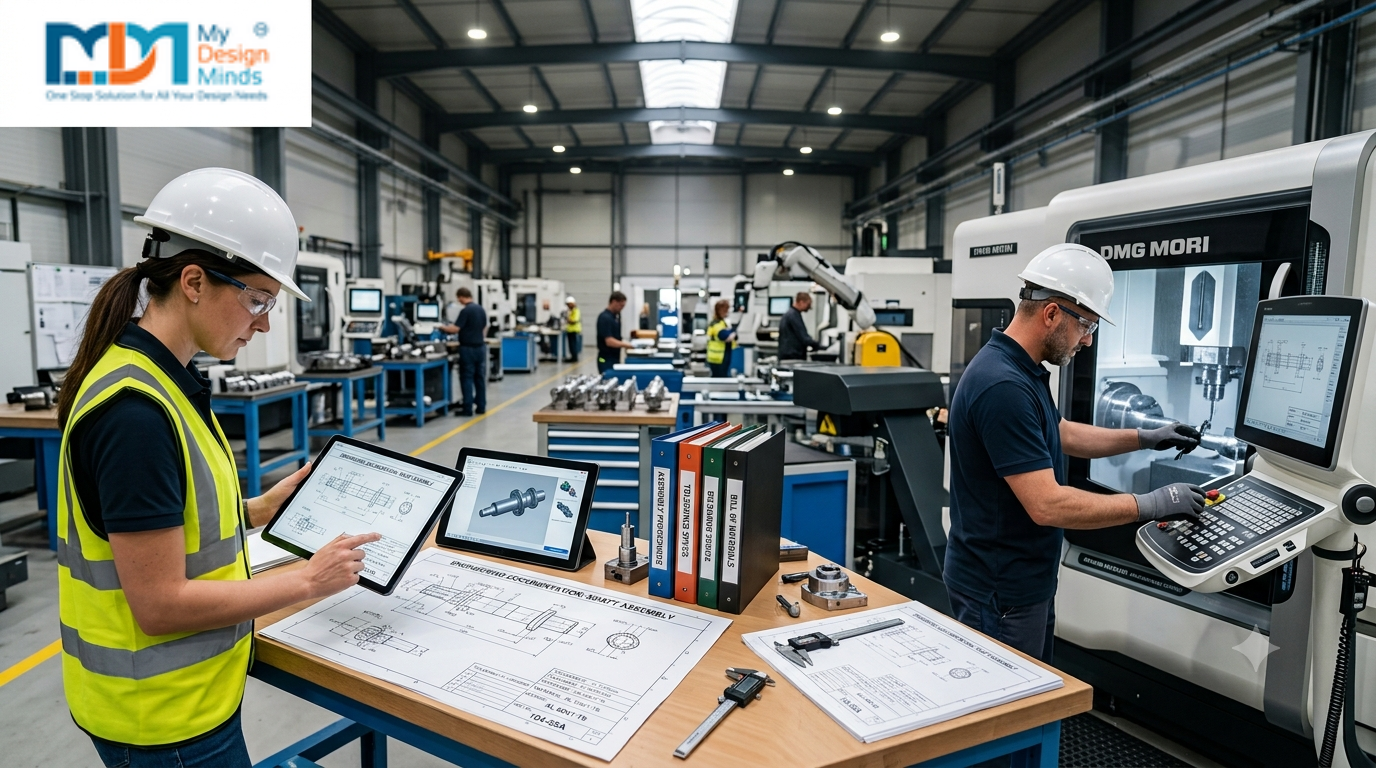
Accurate manufacturing depends on more than advanced machinery and skilled workers. Manufacturers also need clear, reliable, and detailed technical information to translate product concepts into physical components. This is where engineering documentation becomes essential. From technical drawings and specifications to bills of materials and assembly instructions, well-prepared documentation creates a common reference for designers, engineers, manufacturers, and quality teams.
Professional Engineering Documentation Services help organizations convert engineering data into structured documents that can be understood and used throughout the manufacturing process. When documentation is accurate and consistent, it can reduce production errors, improve communication, and help manufacturers maintain the required product quality.
What Is Engineering Documentation?
Engineering documentation refers to the collection of technical information required to design, manufacture, inspect, assemble, and maintain a product or component. Depending on the project, it can include 2D drawings, 3D CAD models, material specifications, manufacturing notes, tolerances, assembly drawings, bills of materials, and revision records.
These documents provide manufacturers with precise instructions about how a product should be produced. Instead of relying on assumptions or verbal instructions, production teams can work from approved technical information.
Technical Drawing Services play an important role in this process by providing detailed drawings that communicate dimensions, tolerances, materials, surface finishes, and other manufacturing requirements.
Improving Manufacturing Accuracy
One of the biggest advantages of structured engineering documentation is improved manufacturing accuracy. Even a small misunderstanding regarding a dimension, hole position, material, or tolerance can result in defective components.
Detailed documentation reduces ambiguity by clearly defining product requirements. Dimensions can be specified accurately, critical features can be highlighted, and manufacturing notes can communicate special requirements.
For example, a technical drawing can specify the exact diameter of a hole, its location, required tolerance, and surface finish. This allows machinists and production teams to manufacture the component according to the intended design.
Supporting Consistent Production
Manufacturing often involves producing hundreds or thousands of identical components. Without standardized documentation, maintaining consistency can become difficult.
Manufacturing Documentation establishes a standardized reference that production teams can follow. When the same approved drawings and specifications are used across production batches, manufacturers can reduce variations between components.
Documentation also helps different suppliers manufacture the same component according to identical requirements. This is especially useful for companies that outsource machining, fabrication, injection moulding, or other manufacturing activities.
Reducing Production Errors
Manufacturing errors can lead to material waste, rework, production delays, and increased costs. Many of these problems can be prevented before production begins by ensuring that engineering documents are complete and properly reviewed.
Engineering documentation can identify critical dimensions, assembly requirements, material grades, and inspection criteria. When this information is clearly presented, workers are less likely to interpret requirements incorrectly.
Professional Engineering Documentation Services can also help organize technical information so that manufacturing teams can quickly locate the information they need.
Supporting Assembly and Inspection
Engineering documentation is not limited to individual components. It also supports assembly and quality inspection.
Assembly drawings can show how multiple components fit together, including their orientation and connection points. Exploded views can make complex assemblies easier to understand, while part numbers can help workers identify individual components.
Inspection teams can also use engineering drawings to verify finished components. They can compare manufactured dimensions against specified tolerances and determine whether parts meet the required standards.
This creates a connection between design, manufacturing, assembly, and quality control.
Managing Design Changes and Revisions
Products frequently undergo design changes during development and manufacturing. A dimension may be modified, a material may change, or a component may be redesigned for better performance.
Without proper revision control, manufacturers may accidentally use outdated drawings. This can result in incorrect components being produced.
Well-managed Manufacturing Documentation includes revision information that helps teams identify the latest approved version of a document. Revision histories can also provide a record of what changed and when the change was introduced.
This is particularly important for complex products with many components and multiple suppliers.
Improving Communication Across Teams
Engineering documentation creates a common technical language between different departments. Designers can communicate product intent, engineers can specify technical requirements, manufacturers can understand production instructions, and quality teams can establish inspection criteria.
Technical Drawing Services can be especially valuable when manufacturing teams need detailed visual references. Clear drawings reduce dependence on lengthy explanations and make technical information easier to interpret.
Effective documentation can also improve communication between companies and external manufacturing partners, helping ensure that everyone works from the same technical requirements.
Supporting Cost and Production Efficiency
Accurate documentation can contribute to better manufacturing efficiency. When production teams have clear instructions, they can spend less time resolving design-related questions or correcting avoidable mistakes.
Better documentation can also support material planning through accurate bills of materials and help manufacturers identify components, quantities, and specifications before production begins.
Over time, these improvements can reduce waste, minimize rework, and support more predictable production schedules.
Why Professional Documentation Matters
Creating engineering documentation requires technical knowledge, attention to detail, and an understanding of manufacturing requirements. Documents must not only represent the design accurately but also communicate information in a practical format for production teams.
Professional Engineering Documentation Services can help companies maintain consistency across drawings, models, specifications, and manufacturing records. By establishing accurate technical references, businesses can create a stronger connection between product design and physical manufacturing.
My Design Minds
My Design Minds provides professional design and engineering support for businesses developing and manufacturing products. Our team can help create accurate technical drawings, 3D CAD models, manufacturing documentation, assembly information, and other engineering deliverables. With a focus on precision and practical manufacturing requirements, we help clients transform design concepts into production-ready information. Our approach supports better communication between engineering and manufacturing teams while reducing avoidable errors and rework. Whether you are developing a new product, modifying an existing component, or preparing technical information for production, My Design Minds can support your project from design documentation through manufacturing preparation.
