Introduction
Developing a new product requires manufacturers to make important decisions before production begins. Understanding how a product will look, function, fit, and interact with its environment can be difficult when teams are working only with sketches, technical drawings, or basic CAD models. 3D Product Visualization Services provide a powerful way to transform product concepts into realistic digital representations that are easier to understand and evaluate.
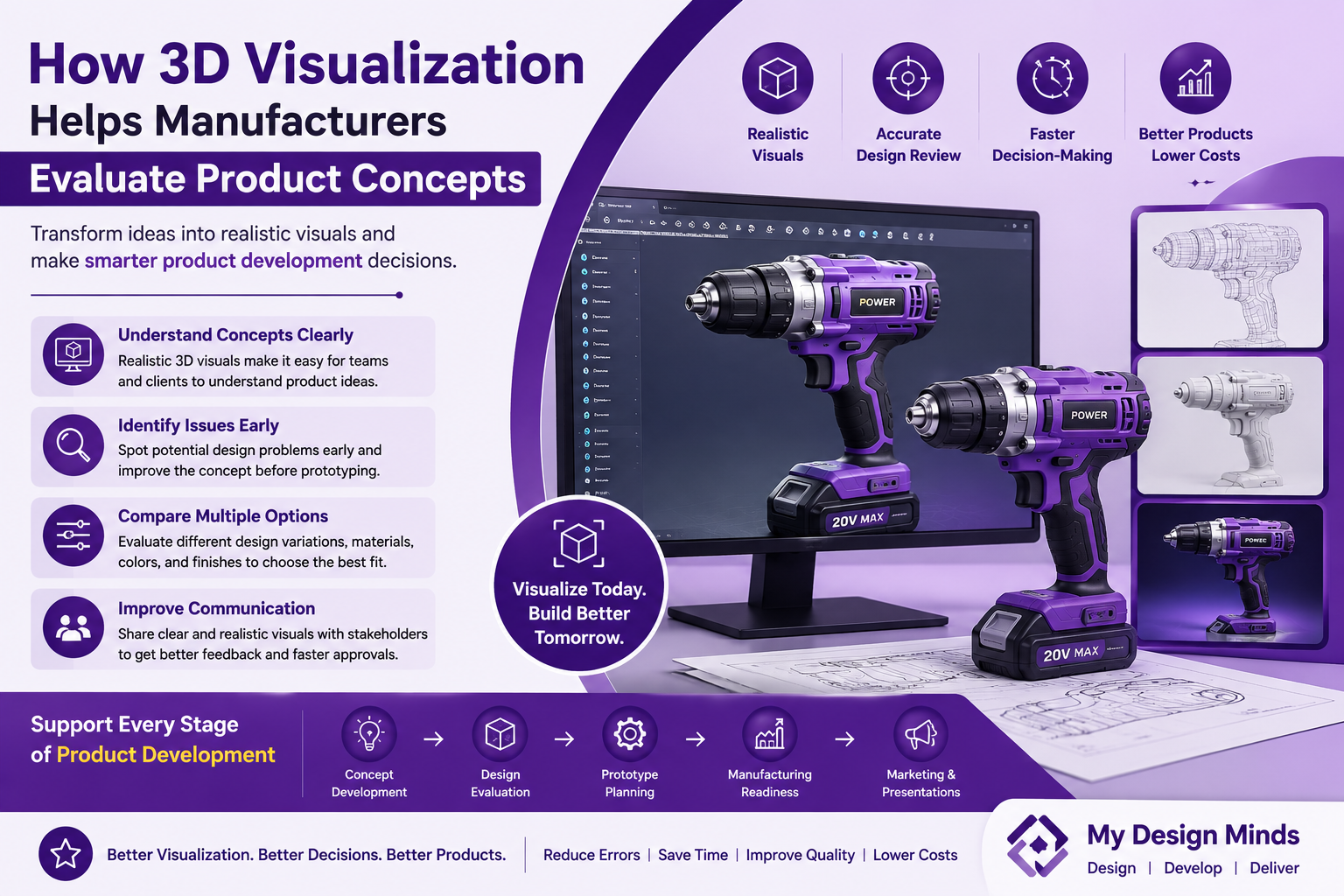
Using advanced 3D modeling, rendering, lighting, materials, and visualization techniques, manufacturers can review product concepts before investing in prototypes or tooling. This helps design and engineering teams identify potential issues, compare alternatives, communicate ideas, and make informed decisions throughout the development process.
1. Makes Product Concepts Easier to Understand
Early-stage product concepts can be difficult for clients, engineers, production teams, and non-technical stakeholders to interpret. A realistic 3D visualization provides a clearer representation of the proposed product.
Instead of relying on imagination to understand a technical drawing, stakeholders can view the product from different angles and examine its overall shape, proportions, components, and design features. This creates better communication between teams and reduces misunderstandings during development.
2. Helps Evaluate Product Form and Appearance
Product appearance can influence customer perception, usability, and market acceptance. Manufacturers can use realistic digital models to evaluate different shapes, finishes, textures, colors, and materials before creating physical samples.
Design teams can compare multiple variations and determine which concept best supports the intended brand and user experience. 3D Product Rendering Services can also create high-quality visual presentations that help decision-makers assess a product’s appearance before manufacturing.
3. Identifies Design Issues Earlier
Finding a design problem after production begins can result in expensive modifications, material waste, and delays. Digital visualization provides an opportunity to examine the product before physical manufacturing.
Manufacturers can inspect component placement, proportions, clearances, interfaces, and overall product structure. While visualization does not replace engineering validation, it can help teams identify visible design concerns at an early stage.
Early feedback allows designers to make changes digitally instead of waiting until a physical prototype has already been produced.
4. Supports Better Design Comparisons
Manufacturers often develop several concepts before selecting a final design. Comparing these concepts through sketches alone may not provide enough information for effective decision-making.
With Product Design Visualization, teams can create multiple versions of a product and compare their appearance, configuration, materials, and features. This makes it easier to discuss advantages and limitations and select a concept that aligns with technical, functional, and commercial requirements.
Digital comparisons can also help clients provide feedback more quickly, reducing unnecessary design iterations.
5. Improves Communication With Clients
Manufacturing projects frequently involve communication between designers, engineers, manufacturers, suppliers, and customers. Technical terminology and engineering drawings may not be equally accessible to everyone.
Realistic 3D visuals provide a common reference for discussions. Clients can see how the proposed product is expected to look and request changes before development progresses too far.
This visual communication can improve collaboration and help ensure that the final design reflects the customer’s expectations.
6. Supports Prototype Planning
Physical prototypes are valuable, but they can require considerable time and resources. Before investing in a prototype, manufacturers can use visualization to review the concept and make preliminary design decisions.
3D Visualization for Manufacturing allows teams to study the product digitally, examine different configurations, and prepare a more refined concept for prototyping.
This can help reduce the number of unnecessary prototype iterations. Once the concept is approved, the design can move toward detailed CAD development, engineering validation, prototyping, and production.
7. Helps With Marketing and Product Presentation
3D Product Visualization Services is not limited to engineering and design evaluation. Manufacturers can also use realistic visuals for presentations, catalogs, websites, sales proposals, and promotional campaigns.
When a physical product is still under development, high-quality digital images can communicate its intended appearance before manufacturing is complete. This can help sales and marketing teams present new products to customers, distributors, investors, and business partners.
8. Reduces Development Risks
Every product development project involves decisions about design, materials, functionality, manufacturing, and cost. Making these decisions without a clear understanding of the final product can increase development risks.
Visualizing concepts early provides stakeholders with additional information for evaluating alternatives. Teams can review the product from multiple perspectives, identify areas requiring further investigation, and make design changes before committing to expensive manufacturing activities.
9. Supports Faster Decision-Making
Product development often involves several rounds of feedback. Delays can occur when stakeholders need to interpret drawings or wait for physical samples before making decisions.
Interactive and realistic digital models can speed up this process by giving teams a clear visual reference. Changes can be presented quickly, allowing stakeholders to review different options and provide feedback earlier.
This creates a more efficient workflow from concept development to final product design.
Conclusion
3D visualization is an important tool for manufacturers looking to evaluate product concepts before moving into expensive physical development. It improves communication, supports design comparisons, highlights potential issues, assists prototype planning, and provides realistic product presentations. By combining CAD data with high-quality visualization techniques, businesses can make better-informed decisions throughout the product development process.
3D Product Visualization Services can therefore help manufacturers connect creative product ideas with practical development requirements. When visualization is integrated with product design, engineering, and manufacturing expertise, businesses can create clearer concepts and move toward production with greater confidence.
How My Design Minds Supports Product Visualization and Development
My Design Minds provides professional design and visualization support for businesses developing new and improved products. The team can assist with 3D modeling, product visualization, realistic rendering, CAD development, and manufacturing-focused design. 3D Product Rendering Services from My Design Minds can help manufacturers present concepts clearly, review design alternatives, and communicate product ideas with clients and internal teams. By combining Product Design Visualization with technical design expertise, My Design Minds supports a smoother transition from concept to detailed development. Its solutions are designed to help businesses evaluate ideas, refine product appearance, improve communication, and prepare concepts for prototyping and manufacturing. This integrated approach helps manufacturers turn ideas into clear, practical, and market-ready product concepts.