
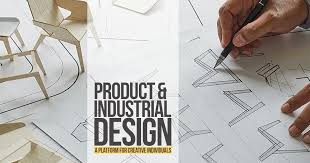
The year 2026 marks a turning point for product-led businesses. Global startups, Indian manufacturers, and OEMs are no longer competing only on cost—they are competing on speed, intelligence, and experience. Industrial design and manufacturing 2026 is about creating products that are user-centric, production-ready, and scalable from day one.
For founders, product managers, and sourcing heads, the challenge is clear: how to turn an idea into a manufacturable product without delays, redesigns, or cost overruns. At My Design Minds, we work with this exact customer persona—teams that want design excellence combined with real manufacturing outcomes.
The Evolution of Industrial Design in 2026

Modern industrial design has moved far beyond surface aesthetics. In industrial design and manufacturing 2026, design decisions directly impact tooling cost, material efficiency, compliance, and product lifecycle. Customers expect products that are intuitive, durable, and sustainable—without sacrificing speed to market.
This shift has made AI driven product design an essential part of the process. Designers now rely on intelligent tools to test ergonomics, simulate performance, and optimize structures before physical prototyping begins. These capabilities allow companies to reduce iterations and make confident decisions early.
At the same time, industrial designers must think like manufacturing engineers. Design that cannot be produced efficiently has no commercial value, making integration critical in industrial design and manufacturing 2026.
Manufacturing Readiness Is the New Competitive Edge
In 2026, successful products are designed with manufacturing constraints already in mind. This is where design for manufacturability becomes a strategic advantage rather than a technical afterthought. When products are engineered to suit specific processes like injection moulding, CNC machining, or sheet metal fabrication, production becomes faster and more predictable.
My Design Minds integrates manufacturing logic into every design phase. By aligning CAD, materials, tolerances, and tooling strategies early, clients avoid late-stage surprises. This approach significantly reduces development costs while improving consistency—an essential requirement in industrial design and manufacturing 2026.
As global brands increasingly outsource production, India has emerged as a preferred hub due to engineering talent and flexible supply chains. This rise of smart manufacturing India enables international clients to combine innovation with scalability.
The Role of AI and Digital Engineering
Digital tools now sit at the core of industrial design and manufacturing 2026. Cloud-based collaboration, simulation-driven validation, and predictive analytics are reshaping how teams work across geographies.
With AI driven product design, engineers can explore thousands of design possibilities and select the most efficient option based on strength, weight, and cost. These insights shorten development cycles and improve first-time-right production.
My Design Minds uses advanced CAD and simulation workflows to ensure that every design is validated digitally before physical execution. This reduces material waste, tooling revisions, and time-to-market—key priorities for fast-moving startups.
Sustainability as a Design Requirement
Sustainability is no longer optional in industrial design and manufacturing 2026. Regulatory pressure and customer awareness have pushed brands to rethink materials, energy use, and recyclability.
Through design for manufacturability, sustainability goals can be achieved without increasing cost. Optimized wall thickness, material substitution, and modular construction improve both environmental and economic performance. Indian suppliers adopting smart manufacturing India practices are also using energy-efficient machinery and waste-reduction systems.
At My Design Minds, sustainability is embedded into product architecture, ensuring compliance while maintaining performance.
Why Integrated Partners Matter in 2026
Fragmented workflows slow innovation. Companies now prefer partners who understand design, engineering, and manufacturing as a single ecosystem. Industrial design and manufacturing 2026 demands collaboration, transparency, and execution excellence.
My Design Minds supports clients from concept sketch to production support, bridging the gap between creativity and manufacturability. Whether supported by AI driven product design or refined through design for manufacturability, every project is aligned with real production conditions and supplier capabilities within smart manufacturing India.
Conclusion
The future belongs to companies that design with intent and manufacture with intelligence. Industrial design and manufacturing 2026 is not about isolated processes—it is about integrated thinking, smart tools, and execution-ready strategies.
At My Design Minds, we help startups and global brands transform ideas into scalable products by combining innovation, engineering precision, and manufacturing expertise. In a rapidly evolving market, this holistic approach is what turns great ideas into successful products.
